
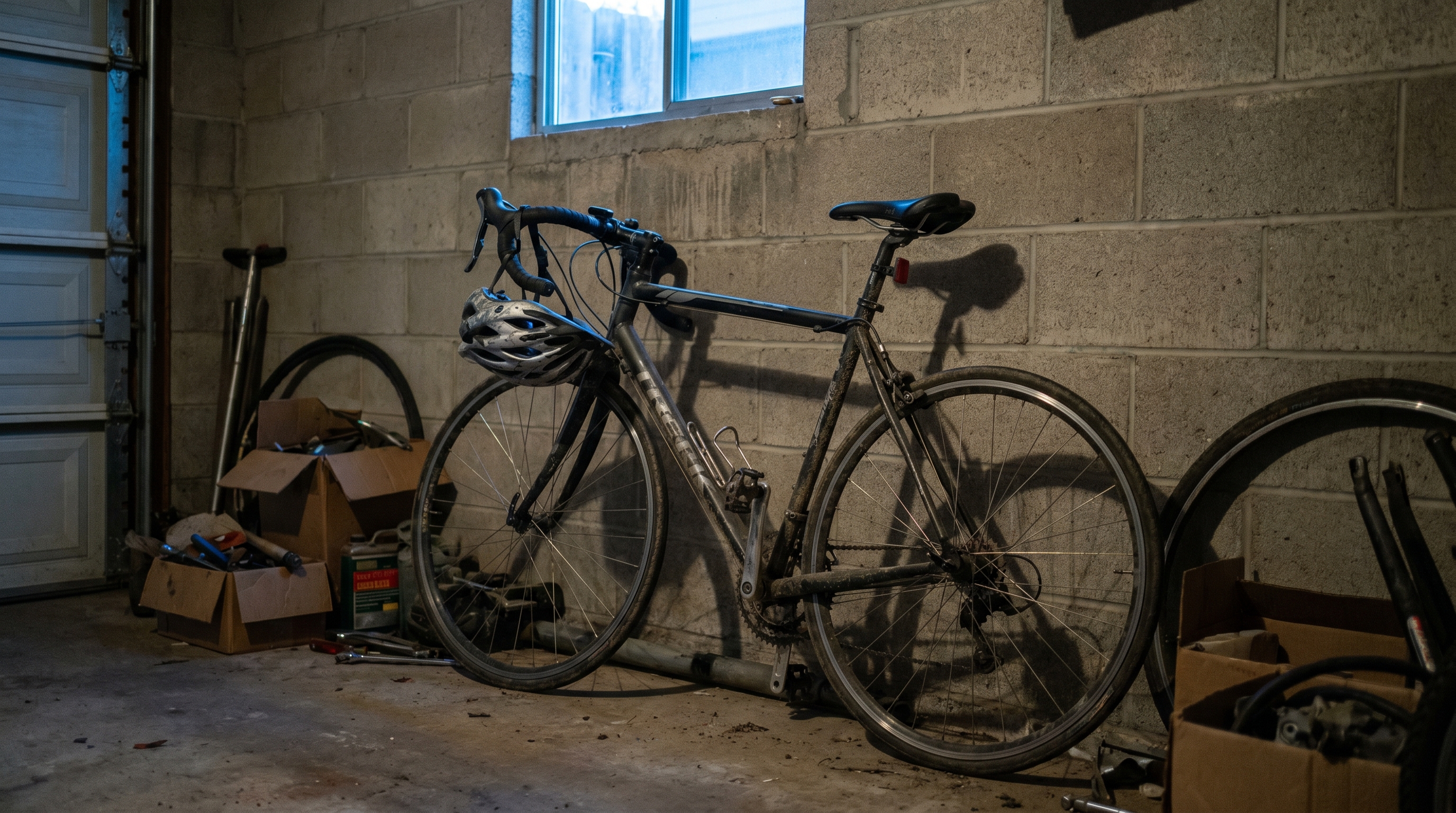
There's a version of this story almost every cyclist knows. The helmet is technically fine. It passed whatever certification, it fits well enough, it lives on a hook by the door or in the garage. And still, maybe three rides out of ten, it stays there. Not because the ride isn't happening. Because the buckle is annoying at 6am, and the rational brain quietly decides that a short one doesn't really count.
That's not a safety attitude problem. That's a design problem.
The buckle is where helmets actually fail
Helmet manufacturers have spent decades improving foam density, shell geometry, and vent aerodynamics. The chin strap closure, for most helmets, is still a fiddly threading exercise that assumes you have two free hands, good lighting, and patience. You need to thread a tab through a frame, pull a slider, check that it's flat, not twisted, not too tight. It's the kind of task that's fine once you know it, and mildly miserable every single time.
The occipital area compounds this. Most helmets wrap the top and sides of the skull and stop. The lower rear of the head, where the skull meets the neck, stays exposed. It's not a rare impact zone. Road crashes and trail spills both regularly involve rear-head contact, and the part most helmets leave unprotected is the part closest to the ground when a rider goes over the bars.
These aren't obscure engineering complaints. They're the reasons helmets don't get worn.
The version we settled on for this edit is the Magnetic Buckle Bike Helmet, and the name describes the fix accurately. The closure is a single-motion magnetic snap. No threading. No slider. One hand, under the chin, done. The kind of closure that takes longer to describe than to use. At 6am, that matters. After a two-hour climb when your hands are tired, it matters more.
The shell is PC hardcoat over a one-piece EPS foam liner, which means impact energy distributes across the full structure rather than concentrating where contact happens. The extended rear section covers the occipital region specifically, the gap most helmets leave open. It carries GB, CE, and CPSC certifications, so those claims are independently verified. Seventeen aerodynamic vents run air through efficiently enough that you notice airflow rather than its absence. The liner is plant-based, pulls moisture away, and detaches for washing. The PC edge wrapping resists scuffs and dents across seasons of real use. The oversized visor adjusts for glare, light rain, and trail debris without cutting your sightline. It fits 58 to 62 cm and comes in under any weight you'd consciously notice wearing.
It's designed for the rider who goes out most mornings, and equally for the one who's getting back into it after a few years off. The guy who's been telling himself he'll ride more. The one who's been putting it off partly because his current setup has that buckle problem and he hasn't wanted to admit it. This is the helmet that removes the argument he's been having with himself at the door.
Worth having on the rack for every ride, not just the ones where he remembers to be responsible about it.