
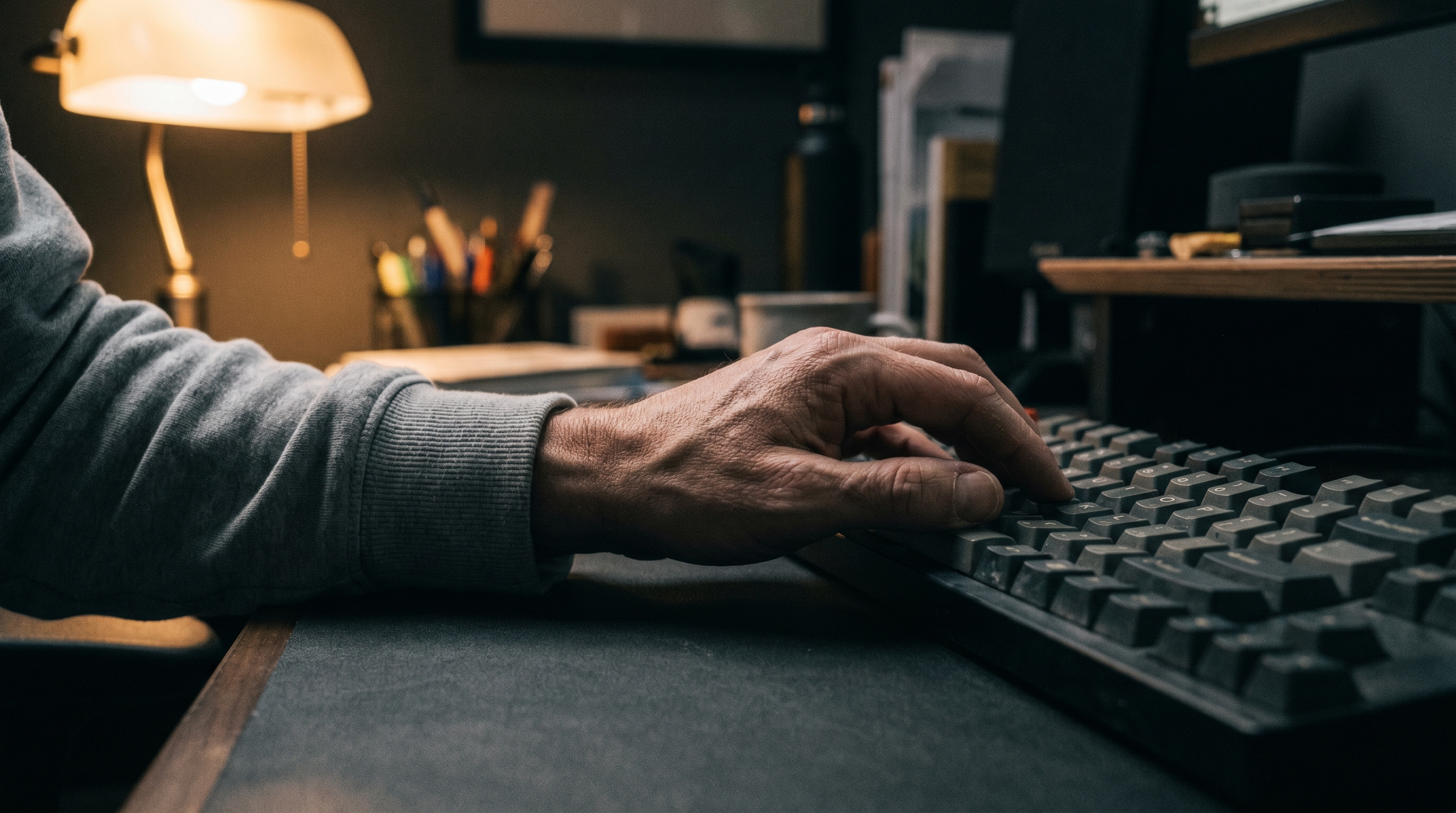
There's a specific kind of wrist fatigue that doesn't come from one event. No fall, no twist, no dramatic moment you can point to. It builds across months of eight-hour keyboard days, trackpad scrolling, late gaming sessions, and the particular tension of holding a mouse in the same position for years. By the time it's noticeable, it's been there for a while.
Most men do nothing about it until it graduates into something with a clinical name. And even then, the solution usually looks like a rigid pharmacy brace in beige neoprene, the kind of thing engineered purely for compliance, not for wearing at a desk during a Zoom call or dropping into a bag between client sites. It gets used once, maybe twice, then disappears into a drawer.
What heat and vibration actually do here
Applying consistent, targeted warmth to the wrist joint increases local circulation and relaxes the surrounding connective tissue, tendons included. This isn't spa logic. It's the same principle behind athletic recovery wraps and physical therapy protocols. The difference between a heating pad draped over a wrist and a fitted heated brace is contact and consistency. The heat has to stay where the tension is, not migrate toward wherever gravity takes it.
Low-frequency vibration adds another layer. Applied at the right intensity, it dampens localized muscle tension in a way that passive heat alone doesn't, which is why the combination shows up in both clinical recovery tools and serious athletic gear. The key word is calibration: too aggressive and it's uncomfortable, too subtle and it's background noise. Three levels of each gives enough range to find what actually works for a given day and a given level of soreness.
The version we settled on is a flannel-lined elastic wrap with three heat settings and three vibration modes, powered by a 2000mAh USB-C battery that holds enough charge for over an hour of continuous use. The auto-shutoff kicks in at 15 minutes, which is about right for a targeted session between meetings or after a long run at the keyboard. Single-button controls. No app pairing, no manual, no learning curve. It fits close and stays there while he's using it, and it's compact enough to sit on a desk without looking like medical equipment.
The people it suits best are the ones logging the hours that cause this kind of wear quietly and reliably: software developers, designers, writers, anyone whose work lives in their hands. It's also a legitimate option for someone who games regularly and already knows the low-grade ache that settles in after a long session. The form factor is discrete enough to wear during the day and easy enough to keep in a bag for use wherever the work happens to be.
Wrist tension is one of those things that gets rationalized into routine until it stops being ignorable. This is a low-effort way to stay ahead of that line.
Worth keeping at the desk.