
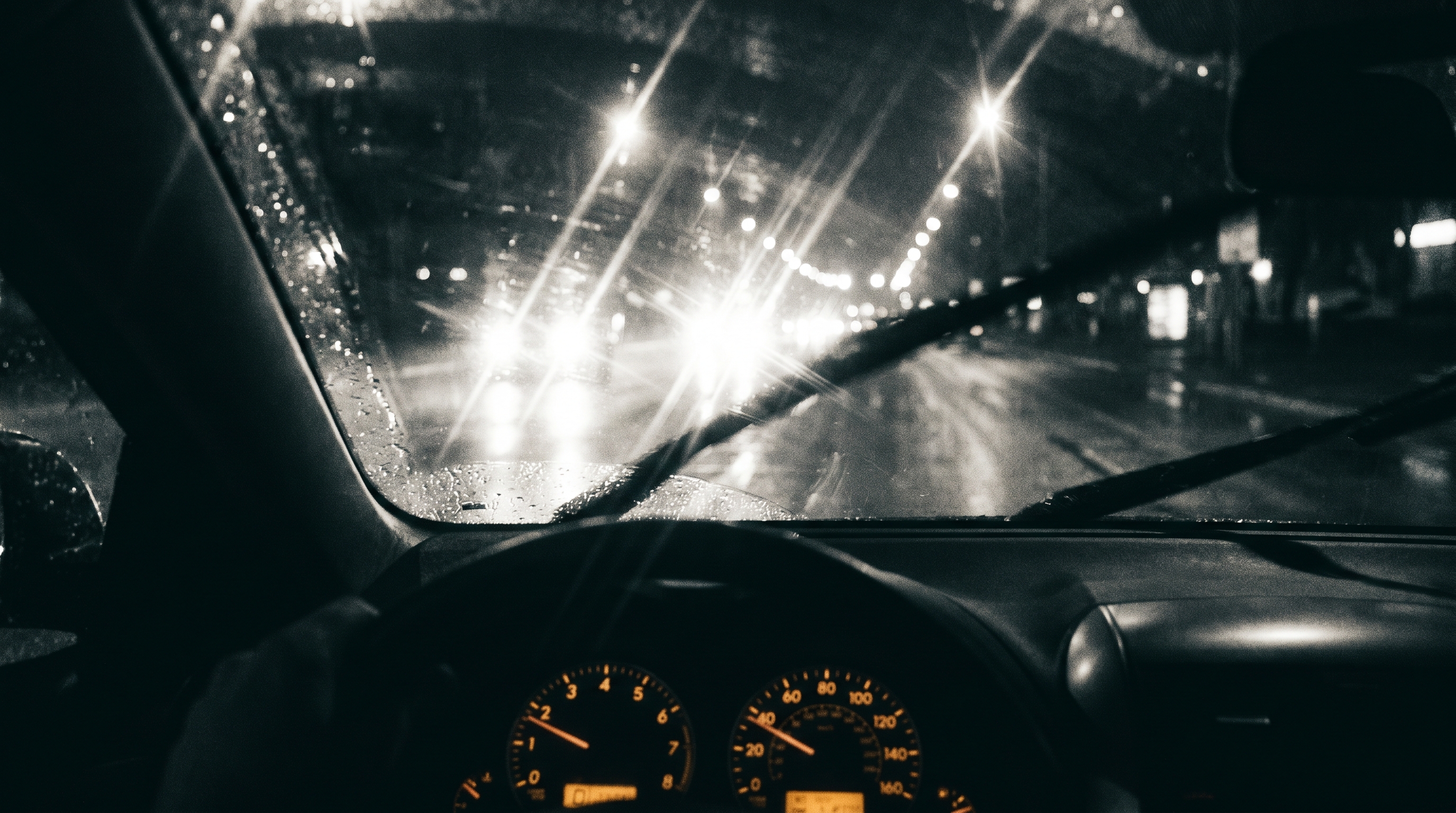
Most dash cam footage is unusable. Not technically, not on paper, but in practice, when you're standing in a parking lot after a fender-bender trying to read a license plate off a 1080p clip shot into afternoon glare. The timestamp is there. The car is a blur. The plate is a smear of light.
The category has a marketing problem masquerading as a technology problem. Manufacturers lead with resolution numbers because resolution is easy to print on a box. What actually determines whether footage is usable in the moment you need it is the sensor, the dynamic range, and how the camera handles the extreme contrast conditions that real driving produces constantly. Bright sky, dark interior. Headlights at night. A plate moving at highway speed. These are the situations that expose everything a spec sheet hides.
What low-light footage actually requires
The physics of a camera sensor are straightforward: larger pixels capture more light, which means less noise in dark conditions and faster shutter speeds for moving subjects. Sony's STARVIS 2 series was built for exactly this application. It's a back-illuminated sensor design that pulls in dramatically more light per pixel than conventional imaging chips, and it was originally developed for surveillance cameras that need to identify faces and plates in near-dark environments. That heritage matters. A dash cam is, at its core, a surveillance device. It should behave like one.
The rear camera is the one most setups treat as an afterthought. A lower-resolution sensor, compressed dynamic range, footage that turns into a white wash the moment headlights appear behind you. Anyone who has driven at night on a highway knows what that looks like: a wall of blown-out brightness where the cars behind you used to be. That's not a minor inconvenience if something happens and you need to show what was there.
Both cameras in a properly engineered dual setup should run HDR. Separately. Simultaneously. Not as a marketing checkbox but because the front and rear of a moving car face entirely different lighting environments at the same instant, and each one needs to be resolved independently.
The storage and installation problems nobody talks about
Even a capable camera becomes an anxiety object if the storage situation is fragile. Most microSD cards aren't rated for the sustained write speeds and temperature swings of continuous in-car recording. The card fills. The overwrite loop corrupts. The file you need most is the one that got overwritten at 2am on a Tuesday. Scaling to an external SSD changes the math entirely: you're no longer managing a 128GB loop, you're managing weeks of continuous footage with room to breathe.
Installation is where a lot of otherwise decent cameras lose the plot. Thick coaxial cables that can't hide behind trim. Interference that knocks out the radar detector or scrambles GPS. A wiring job that looks clean for a week and then starts rattling. A good dash cam should disappear into the car. That's the standard.
We settled on the A329S because it addresses all of these in one build rather than asking you to make tradeoffs. The front runs a Sony STARVIS 2 IMX678 sensor at 4K/60fps, which is fast enough to freeze a plate at highway speed and sensitive enough that low-light footage stays legible rather than grainy. The rear runs a second STARVIS 2 sensor (IMX675) with wide dynamic range specifically tuned for headlight management. Both channels run HDR simultaneously. Storage goes up to a 4TB external SSD or a 512GB microSD card. The 2.8mm coaxial cable routes behind trim cleanly and is shielded so it doesn't talk to anything else already running in the car. Parking mode pulls from ultra-low power so it's monitoring for impacts without quietly draining the battery. Wi-Fi 6 means pulling a full minute of 4K footage to a phone takes under ten seconds, which is the kind of speed that matters in the window right after something happens.
For the guy who commutes daily, drives long distances, or has simply had one too many interactions with a parking lot and no documentation to show for it, this is the configuration that stops being something to think about after the first week. It's installed, it's running, and it's actually capturing what it needs to capture.
Worth having in the car before he needs it.