
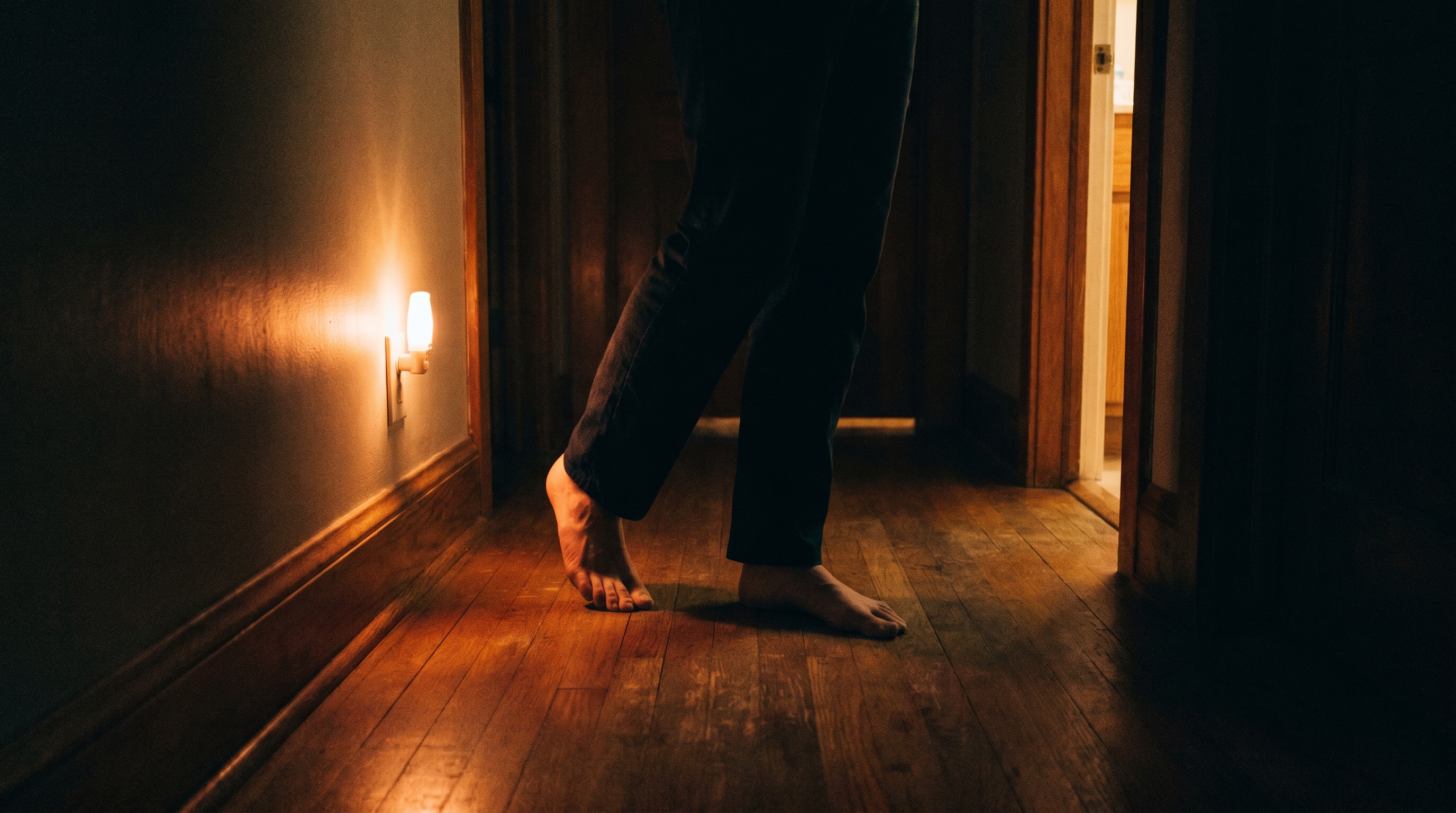
The average person gets up in the night two to three times. Bathroom, water, a noise outside. Each trip is a small negotiation with darkness, and the options have historically been: flip the overhead on and blow out your night vision, squint and shuffle, or accept that furniture corners are an occupational hazard of homeownership.
None of those is a real solution. They're just habits dressed up as decisions.
What automatic actually means
There's a version of "smart home" that requires an app, a hub, a Wi-Fi password, and twenty minutes of setup you'll do once and never remember how to redo. And then there's the version where you push something into an outlet and it handles itself from that day forward.
Dusk-to-dawn sensors fall into the second category. The photosensor reads ambient light continuously. When the room goes dark, the light comes on. When daylight returns, it shuts off. No schedule, no voice command, no dimmer you have to find in the dark first. The physics of the room do the work.
The warm white calibration matters more than it sounds. Cool white or blue-tinted light at night suppresses melatonin, which is the last thing you want at 2am. A properly warm glow, just bright enough to see the floor and the doorframe, lets your body stay in sleep mode even while you're navigating. You wake up, you walk, you go back to bed. The light was there without being intrusive. That's a harder balance to hit than it looks.
The rooms that earn it
A single night light in one bathroom is a partial answer. The real version of this is coverage: the hallway between the bedroom and the bathroom, the top of the stairs, the bedroom itself for the moments just after lights-out when your eyes haven't adjusted. Four locations is roughly the number it takes to make a whole floor navigable without ever reaching for a switch.
It also compounds quietly. The first night, you notice it. The second week, you've stopped thinking about it. A year from now it's just how your home works, in the same way a well-placed coat hook becomes invisible infrastructure. The things that earn their place permanently are rarely the dramatic ones.
The set we settled on is the Dusk-to-Dawn Night Lights, a four-pack of plug-in sensors with warm white output and no moving parts, no app, and no ongoing input required. One plug per outlet, placed once, done. They draw negligible power, which means the math on running them indefinitely is essentially nothing. For someone who travels, or who keeps a place for guests, the lights stay useful without anyone having to remember to switch them on.
Good for him, useful for anyone else who passes through. A bathroom at a rental, a parent's house, a guest room that gets used twice a year. The kind of thing that's immediately practical and disappears into the background the moment it's working.
Worth having in every room you've ever navigated in the dark.