
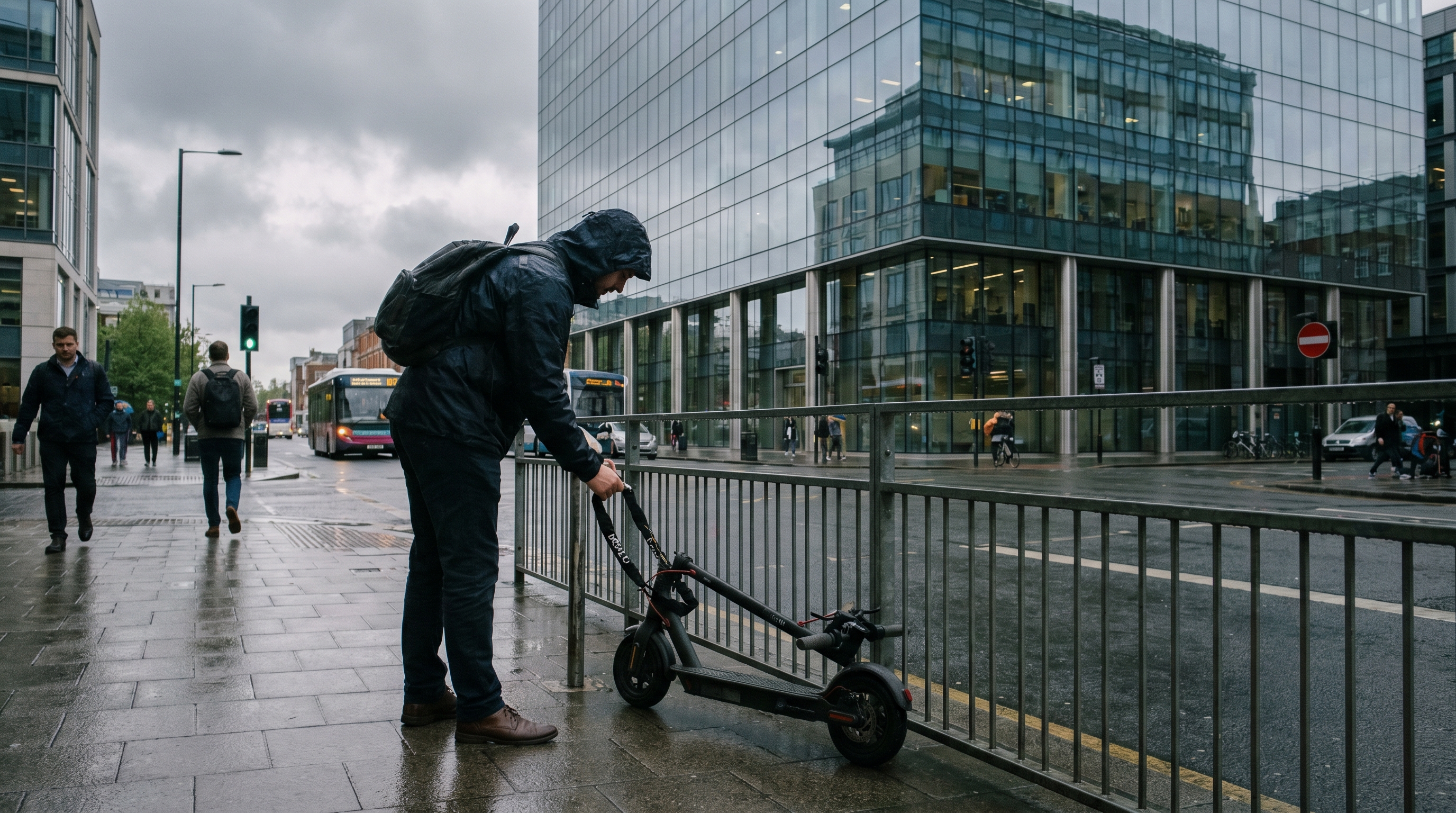
The average urban commute in a developed city sits somewhere between 8 and 12 kilometres. A car covers that distance while burning fuel, hunting for parking, and costing more per kilometre than most people bother to calculate. A rideshare does the same, with surge pricing and someone else's music. Public transit works until it doesn't, which is most mornings in most cities.
The strange thing is that most people know this. They've done the mental math. They just haven't found a single piece of kit that resolves it cleanly enough to commit to.
What the scooter category got wrong for a long time
The first wave of consumer electric scooters was spec-light and built to a price. Ranges that dissolved in headwinds. Brakes that inspired negotiation rather than confidence. Tyres that treated a wet road like an abstraction problem. They worked well enough for a weekend path and not much else. That reputation stuck, and it kept a lot of sensible people on the sidelines longer than they needed to be.
What's changed is the spec floor. Motors got more honest. Battery chemistry improved. Manufacturers started publishing real-world range figures instead of ideal-condition ones. The category matured quietly, and the commuter case for a well-built electric scooter became genuinely compelling rather than aspirationally compelling.
The friction points that remained were mostly engineering ones: stopping distance, wet-weather confidence, and what happens when the scooter needs to go somewhere that isn't the road. Those are solvable problems, and the better machines now solve them.
A 500W motor gives him enough torque to handle inclines without reducing speed to a suggestion. Three speed modes let him move fast on open stretches and dial it back in tighter streets, which matters more than a single top-end number. Drum brakes paired with electronic braking means the stop is measured, not abrupt. IPX5 waterproofing means a grey morning forecast is a non-factor rather than a reason to reconsider.
The version we settled on is the A6L MAX. Forty-five kilometres of real-world range is enough buffer to stop thinking about range entirely on most commutes. The 10-inch solid rubber tyres absorb enough surface variation to feel composed rather than pinched. Front LED, rear brake light, and side lighting handle visibility properly, not as an afterthought. The LCD display keeps speed, battery, and mode legible without requiring a glance that lasts longer than it should. The companion app adds GPS tracking and a smart lock, which matters most when it's locked up outside and he's not.
Folded, it fits in a car boot or stands in the corner of an office without causing a conversation. At 16.8kg it isn't featherweight, but it's within the range most people pick up without registering the effort.
For someone who has been quietly optimizing a city commute, or for someone buying for a person in that position, this is the shortlist of one. Not because it's the flashiest option in the category, but because it's specified to actually solve the problem rather than approximate a solution.
Worth rolling out the door with.