
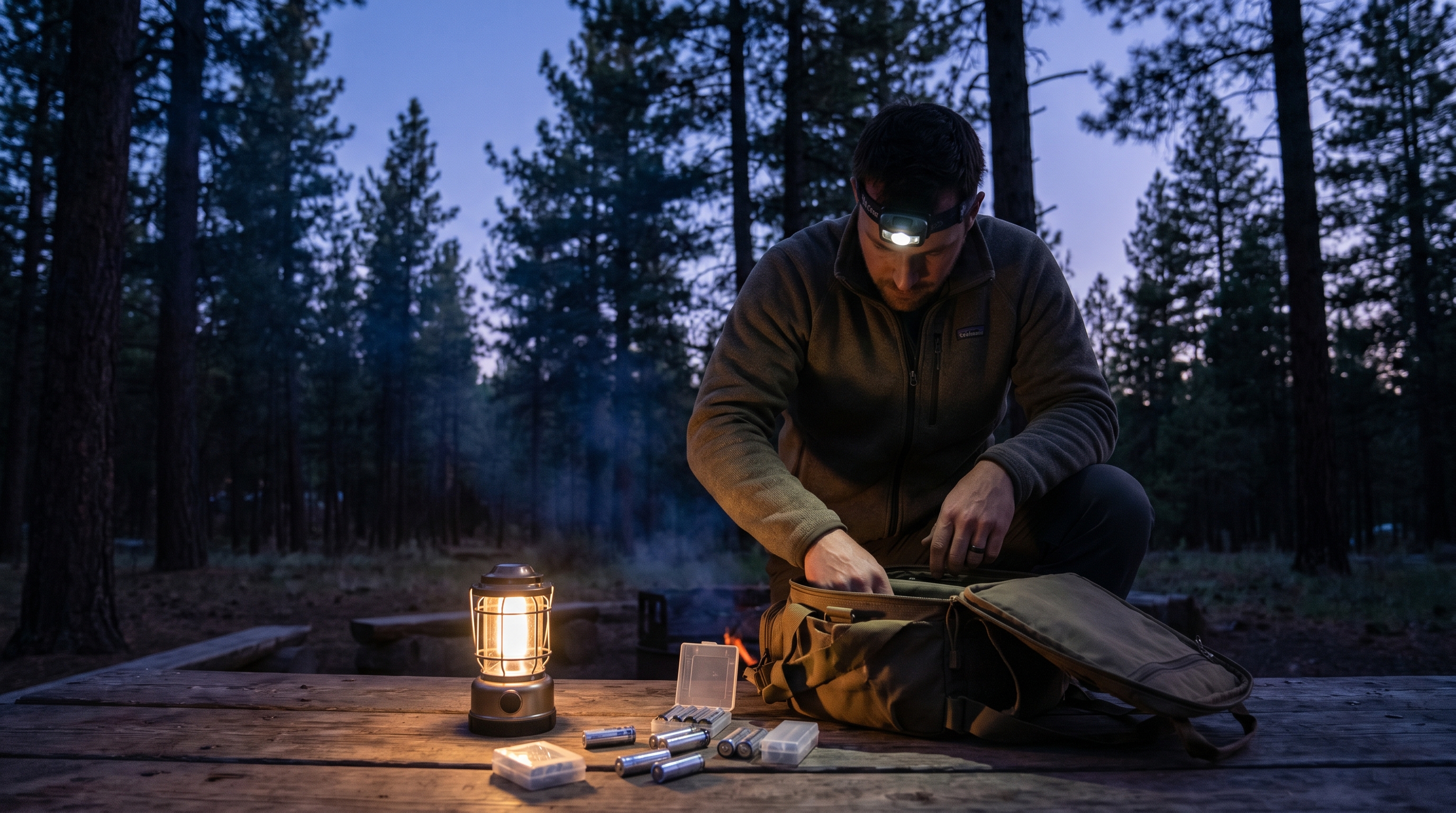
The camping lantern sitting in most people's gear closet runs on AA batteries. Which is fine, until it isn't. The moment it matters most, at 11pm on a campsite two miles from a gas station, is the moment you find out three of the four batteries are dead. You had spares somewhere. You're pretty sure you had spares.
This is not a dramatic failure. It's the quiet, grinding kind. The lantern still technically works. The preparedness still technically exists. But the gap between "I have a lantern" and "I have reliable light" is wider than most people account for when they're packing.
The battery problem is a design problem
Disposable batteries are a holdover from a moment when there was no better option. That moment passed. The issue is that the lantern market never fully reckoned with it. Most rechargeable lanterns fixed the battery and stopped there, which is how you end up with a USB-C port on something that still only does one thing. They're essentially the same product with a different charging protocol.
The more honest question is what you actually want from a lantern. Reliable light at multiple output levels, because 1000 lumens that you can't dim is only useful in one situation. Emergency signaling, because the outdoors has a way of changing plans. A backup power source for your phone, because modern navigation, communication, and weather run on a device that drains fast in the cold. Passive recharging when you're out for more than a day. Splash resistance that doesn't require careful handling in the rain. That's the list. Most lanterns get two or three of those. Some get one.
The 5000K daylight-white output is a detail worth flagging. Warm-white lanterns read cozy and photograph well, but they're harder to work by. 5000K is closer to natural daylight, which means it's easier on the eyes for reading, cooking, or any task where you're actually trying to see something clearly. The step-down modes, 500 and 250 lumens, handle ambient well enough. It's a light that's been thought about rather than specced by default.
We settled on the Solar Rechargeable Lantern because it closes all of those gaps without overcomplicating anything. The 4000mAh battery charges via USB-C from any source and passively via the onboard solar panel when you're outside for a stretch. The USB-A port runs the other direction when his phone needs it. Flashing red and SOS modes are there if the situation calls for them. IPX4 splash resistance means it tolerates actual outdoor conditions. It packs small enough that the decision to bring it is never a negotiation.
The person it makes most sense for is someone who camps with intention, not occasionally but not obsessively either. The kind of person who has decent kit but hasn't replaced the aging lantern because nothing better had obviously presented itself. It's also exactly the right thing for someone building out a go-bag who keeps getting to the lighting section and moving on. Either way, it's the kind of object that stops being noticed after the first trip, because it's just always there and always working.
Worth throwing in the bag.