
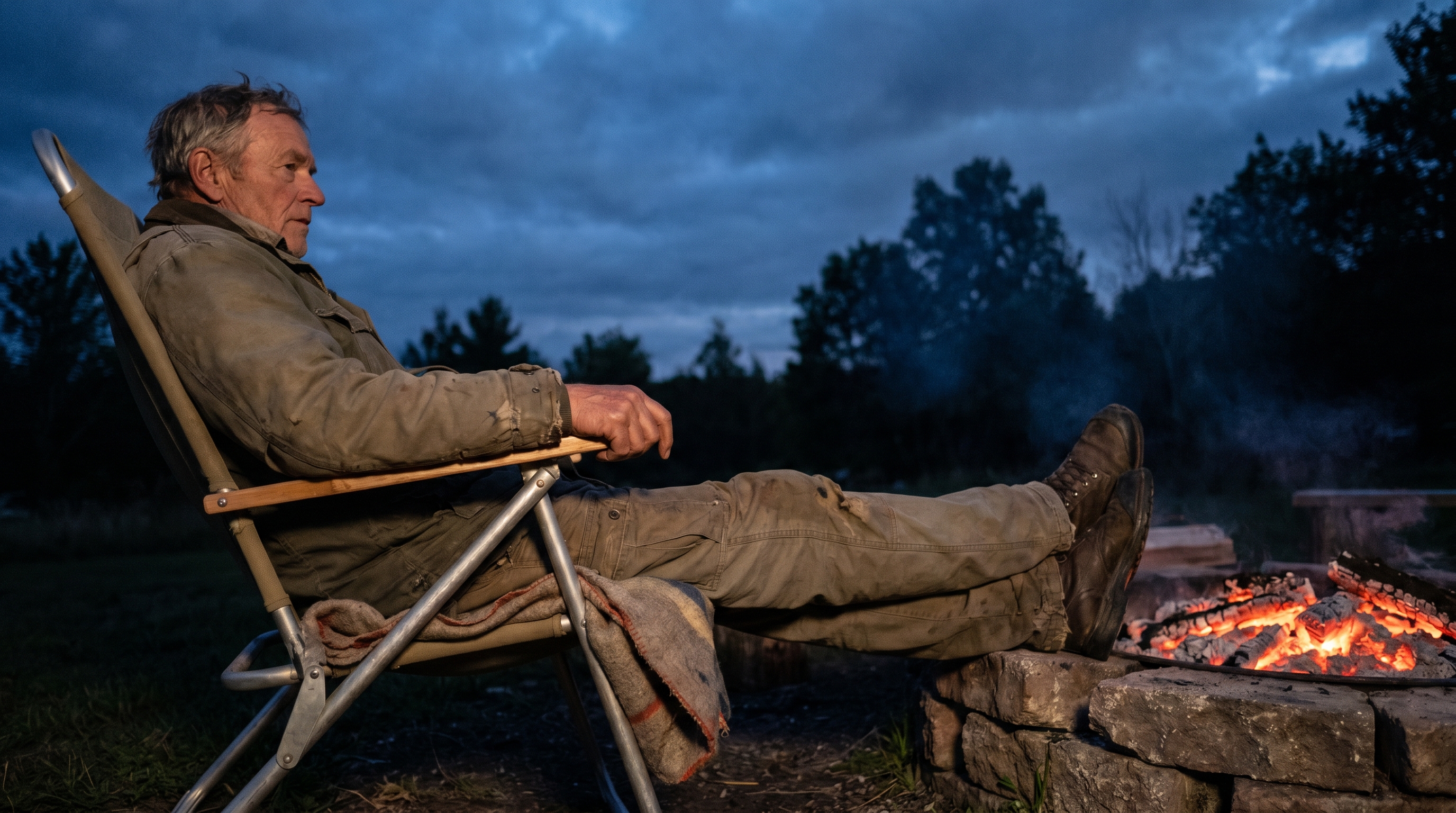
There is a version of outdoor gear that exists almost entirely to be transported. The tent that packs to the size of a wine bottle. The stove that folds flat. The sleeping pad that rolls to nothing. Compression is the value proposition, and for most of that gear, it makes sense. But somewhere along the way, the camping chair absorbed the same logic and quietly gave up on being comfortable.
The average folding camp chair is designed to clear a low bar: four legs, a sling of nylon, and enough structural integrity to keep a person off the ground. That's it. You sit upright at a fixed angle, your lower back negotiates with the frame, and after forty minutes you're standing again. For a gear category that exists specifically so a person can rest outside, that is a strange failure.
What a chair is actually supposed to do
The human body doesn't want to sit at 90 degrees for three hours. It wants to shift, recline, extend the legs, settle into something that accommodates the full length of the spine. Ergonomics research on static sitting postures is consistent on this: a reclined position between 100 and 135 degrees reduces lumbar disc pressure significantly compared to upright sitting. The campfire doesn't care about lumbar disc pressure, but the person sitting beside it for four hours does.
The extended footrest is the other detail that matters and almost never appears. A chair that supports only to the knee leaves the lower leg hanging, which creates tension in the hamstrings and shifts weight awkwardly onto the seat edge. It's a small thing until you've been sitting for two hours and it's suddenly the only thing you notice.
The materials case is quieter but worth making. 600D Oxford fabric is a specification with meaning: the 600 refers to the thread count per square inch, and Oxford weave adds a secondary interlacing that distributes stress across a wider area. The result is fabric that resists tearing under load and sheds water without a coating that cracks after a season. A steel frame rated to 330 lbs isn't about weight capacity as a headline feature. It's about what that rating implies in terms of weld quality, tube gauge, and joint tolerances, which is what determines whether a chair still feels solid on the fifteenth trip out.
The version we settled on is the Folding Camp Recliner. It locks into multiple backrest positions, runs from upright to fully flat without tools or frustration, and includes an extended footrest that actually supports the whole leg. A side pocket handles a phone or a drink. It folds into a carry bag in seconds and moves in one hand from the car to wherever the afternoon is happening. The 600D Oxford fabric and steel frame are the right specs at the right weight for something that will live in a truck bed or a gear closet and come out often.
It suits the person who treats time outside as real time, not a pause between other things. A dock, a tailgate, a backyard on a Sunday with nothing scheduled. The chair becomes the activity, which is the point of having a good one.
Worth handing over.