
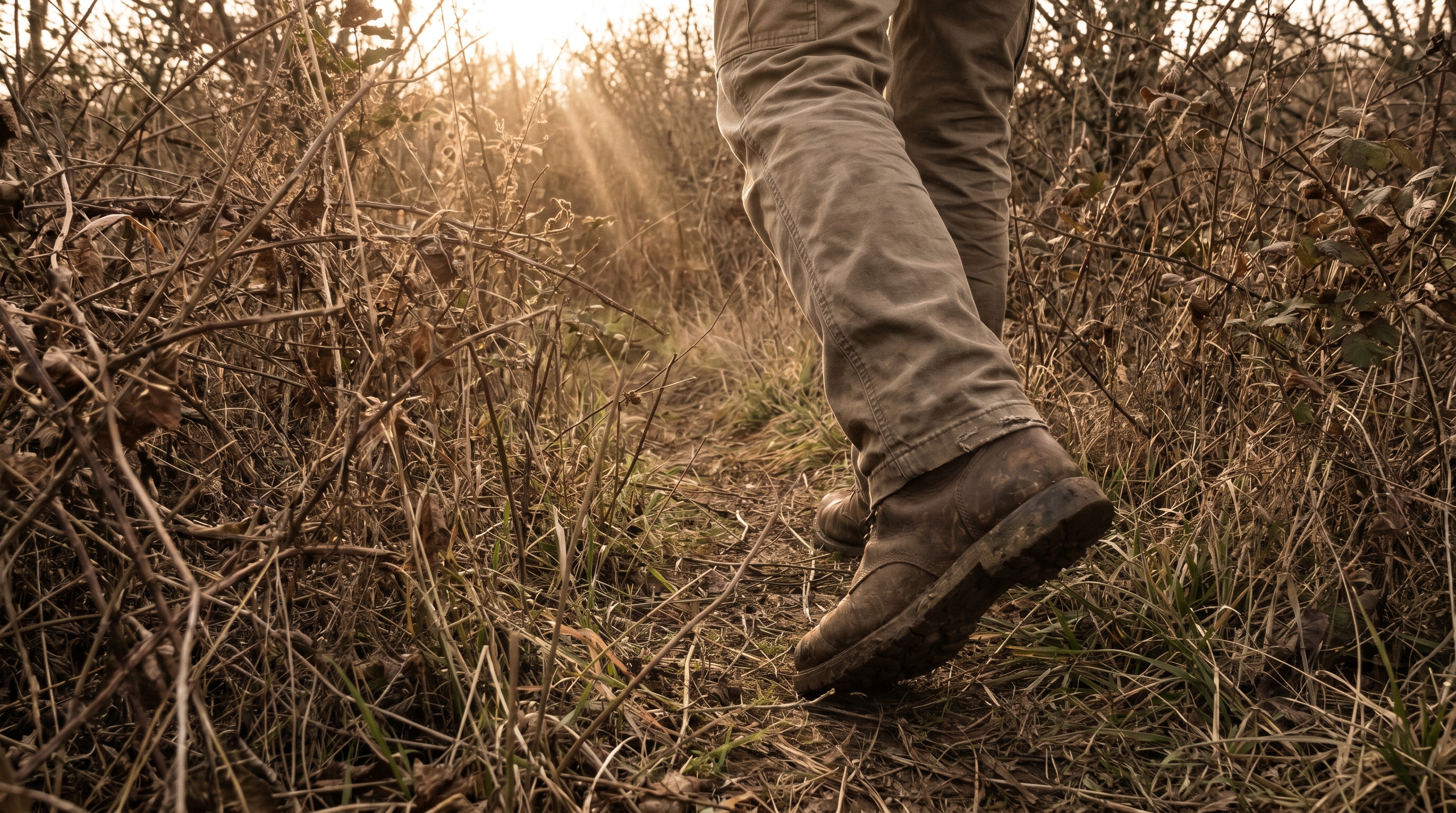
The brush gets thick before you notice it. One moment you're on a clear path, the next you're pushing through overgrown scrub with stems and thorns dragging across your lower leg, ticks finding exactly the gap you left them. That gap is real, it's anatomically predictable, and almost nobody in the outdoor kit conversation talks about it.
The space between the top of a boot and the hem of a trouser is typically three to five inches of exposed or loosely covered leg. On a maintained trail in good conditions, it barely matters. Once the terrain changes, hunting ground, trail clearing work, thick summer growth on a backcountry route, farm edges after a wet season, that gap becomes the most vulnerable part of your body. It's where thorns catch, where brush contacts skin, and, in the wrong geography, where a snake strike lands. Pit vipers and copperheads don't aim high. Neither do rattlesnakes. The lower leg is where the overwhelming majority of snakebite incidents are recorded, and most of them happen to people who knew the area had snakes and went anyway.
What snake-resistant actually means
Bite-resistant construction works on a straightforward mechanical principle: layers of tightly woven abrasion-resistant material increase the force needed to achieve penetration. A fang has to travel through the outer face, resist delamination, and still carry enough force to reach skin. Most don't. The material isn't magic and it isn't rated for every scenario, but it changes the math in your favor in a meaningful way. That matters most in dense vegetation where you can't see your feet, where you're moving with purpose and not gingerly watching every step.
The abrasion resistance does a second, quieter job too. Brush and bramble that would shred a thin trouser hem or leave your lower leg scraped raw after a long day just stop being a factor. For anyone doing trail clearing, working fence lines, or covering real ground in real conditions, that's not a minor benefit. It's the difference between getting home intact and spending the evening with tweezers.
The version we settled on for the shop is built from abrasion-resistant fabric with that snake-resistant construction layered into the design. It sits over the lower leg and closes the boot-to-trouser gap without drama. The fit is adjustable across a solid range of leg sizes, so there's no measuring required before you buy. Strap them on, dial in the fit with the closures, and move. Nothing decorative, nothing that needs careful handling or drying flat. They go in the pack or the truck and they're there when the terrain calls for them.
The kind of man who'd appreciate these is usually already spending time outdoors with purpose: hunting season, trail work, farm perimeters, off-trail hiking in snake country. He probably knows he should have sorted the lower leg situation by now and simply hasn't gotten around to it. They're also worth considering for anyone who gifts with genuine usefulness in mind, the person who wants to hand something over that gets used immediately rather than stored.
Some kit is for edge cases. This is for the gap you walk into before you think to close it.
Worth having in the bag before the trail makes the case for you.