
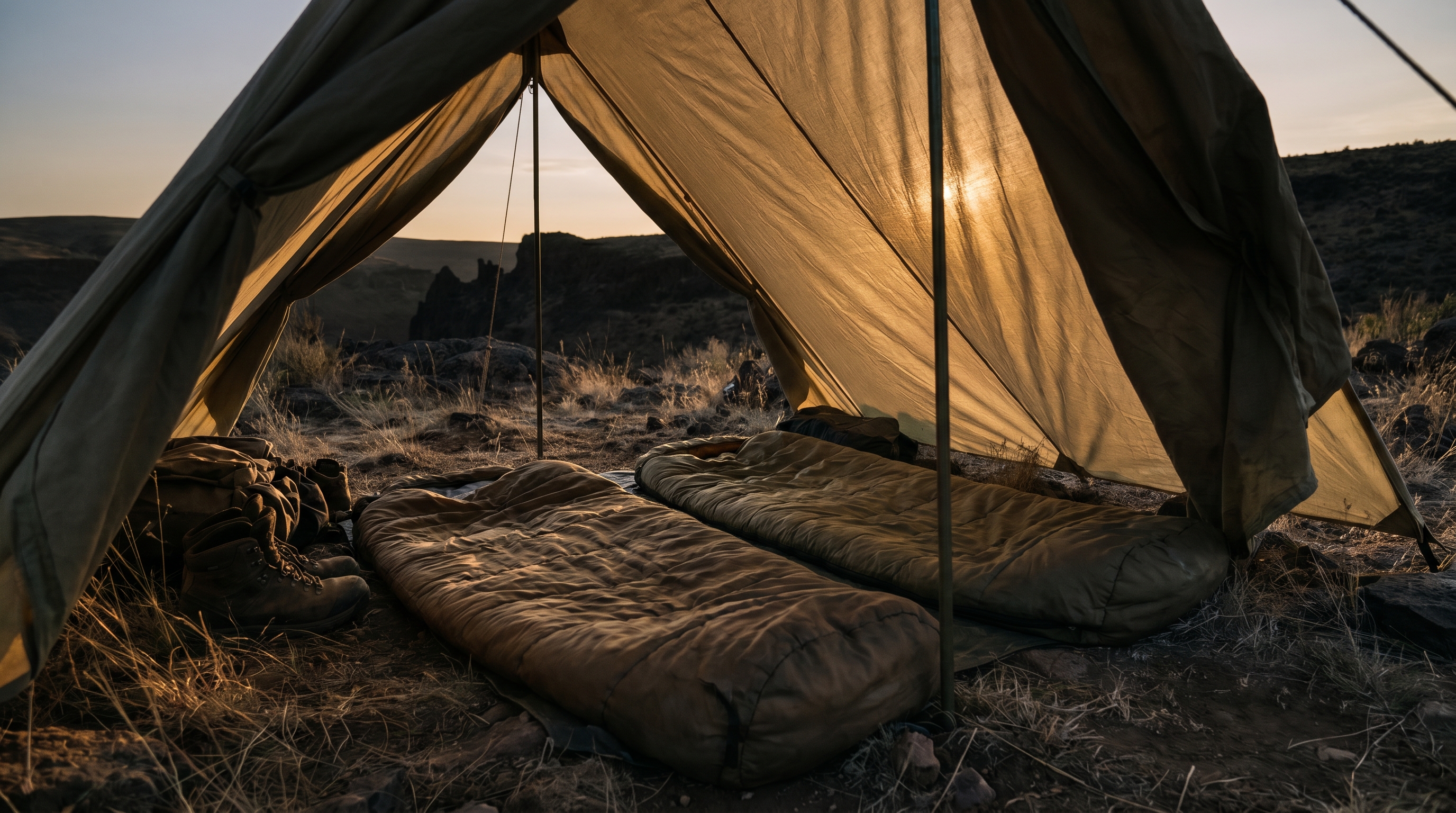
The tent gets upgraded. The sleeping bag gets upgraded. The ground situation stays the same: a rolled foam mat from five years ago, or a cheap inflatable that wheezes flat by 3am and leaves someone sleeping on compressed nylon over root-shaped earth.
It's the least glamorous problem in camping gear, which is probably why it gets ignored the longest. But a bad night's sleep in a tent doesn't make you want to go back. And for two people sharing a sleeping surface, the margin for error is smaller. One side deflates, one side sleeps cold, and the whole trip gets remembered wrong.
What the ground actually does to a night outside
Insulation from the ground matters more than most people account for. Heat loss through conduction, straight into the earth, is faster than heat loss to cold air. A sleeping bag rated to 20°F won't save you if your mat has an R-value of next to nothing and the ground is 45°F and damp. For car camping or backpacking, the mat is doing thermal work as much as comfort work. Thicker isn't always better if it means leaving it in the garage. The calculation has to include whether you'll actually bring it.
Seam construction is the part worth paying attention to on any inflatable. That's where cheaper versions fail first. Pressure concentrates at the edges and corners when someone rolls over or shifts weight in the night. A reinforced seam holds. A heat-welded budget seam peels, slowly, until one morning you're lying on the ground wondering when it happened.
The version we settled on is a double inflatable mat with a thickened sleeping surface and reinforced seaming throughout. It inflates fast enough that it's ready before the tent poles are sorted, packs down to a size that earns its place in the bag rather than being the item that pushes you over your carry limit, and holds its shape through the night on uneven terrain. That last part is the actual test. A mat that's comfortable at 10pm and flat by 4am hasn't solved the problem.
What makes it a piece you'd actually reach for is the range it covers. It works on a trail, on a cabin floor, in a backyard during a kid's first overnight. It stores in a closet corner without drama. That kind of utility is harder to design for than it sounds. Most specialist gear earns its price tag once a season. This one doesn't wait for a specific trip.
For someone who camps with a partner, or who hosts and needs a guest-bed option that isn't an air mattress from a box store, it's a considered solution to a problem they've probably been quietly tolerating. He'll know exactly what it's fixing the first time he uses it.
Worth bringing along.