
Most rooms aren't badly furnished. They're badly decorated, either. The problem, almost always, is the lighting. One overhead fixture doing all the work, casting flat light from the worst possible angle, and every carefully chosen piece in the room looks like it belongs in a waiting area.
Interior photographers know this. They show up to a shoot and the first thing they do is kill the overhead. Then they work with what's close to the floor, close to the walls, close to the objects. Ambient light that wraps a room rather than hammering down on it reads as intentional. It reads as considered. The furniture doesn't change. The room does.
Why most people fix everything except this
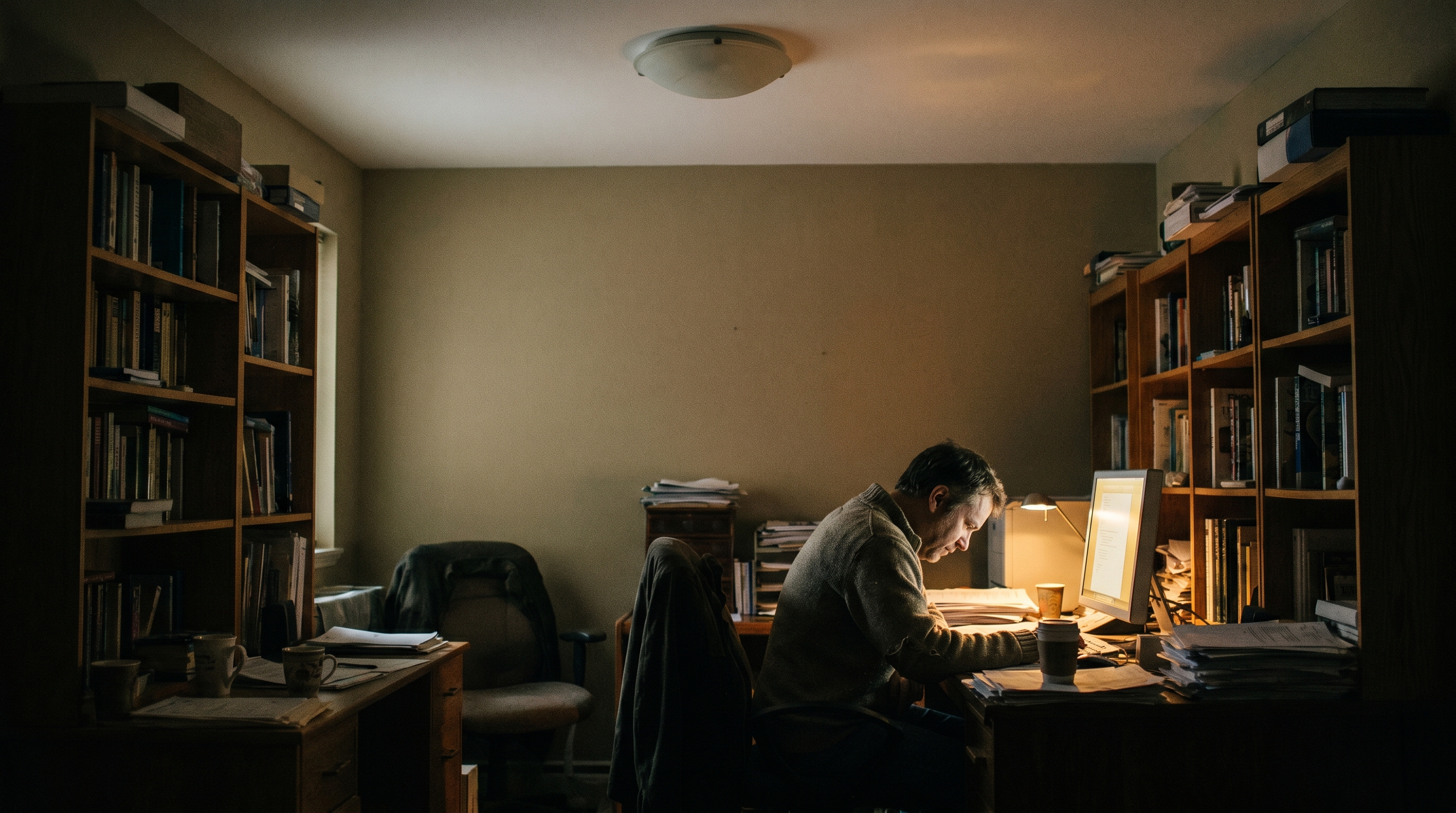
There's a version of a home office that looks exactly like what it is: a desk, a monitor, a chair, and a man who'd rather be somewhere with better natural light. Then there's the version where the monitor has a soft backlight, the shelves behind it glow in something other than fluorescent white, and the whole setup reads like it was planned that way. The difference between those two rooms is usually one afternoon of work.
The same logic applies to a media room, a gaming setup, a bedroom that's supposed to feel like rest actually happens there. Overhead lighting flattens everything. Light at the perimeter, behind furniture, along architectural edges, does the opposite. It adds depth. It makes a room feel larger and more deliberate than it is. Designers charge a lot of money to tell clients this. The underlying principle is not complicated.
What usually stops people is the assumption that doing it properly means hiring someone. Running wire, drilling into walls, calling an electrician for something that feels like it should be a weekend project. That assumption is outdated, and it has been for a while.
The version we settled on is a 65.6-foot LED strip that handles all of the above without any of that friction. The roll is long enough to line a full room perimeter, wrap a ceiling edge, backlight an entire TV wall, or run under kitchen cabinets with footage left over. Adhesive-backed mounting clips and solderless corner connectors mean the whole thing goes up cleanly at 90-degree turns, no tools, no drilling, no commitment beyond peeling a backing strip. Cut sections rejoin with straight connectors, so fitting the strip to a specific run isn't a problem. The HappyLighting app pulls from 16 million color options, handles brightness and scheduling, and includes a music sync mode that uses a built-in microphone to pulse the lights in time with audio. That last feature sounds like a novelty until you've actually used it in a space built for gaming or hosting. It earns its place. An infrared remote covers everything offline if the phone stays in a pocket.
The person who gets the most out of this is someone who has put real thought into a space and stalled at the last step. A home office that's almost there. A media setup that's functional but cold. A bedroom that works but doesn't feel like it was designed. He doesn't need a contractor. He needs an afternoon and the right roll of lights.
Worth the wall space.