
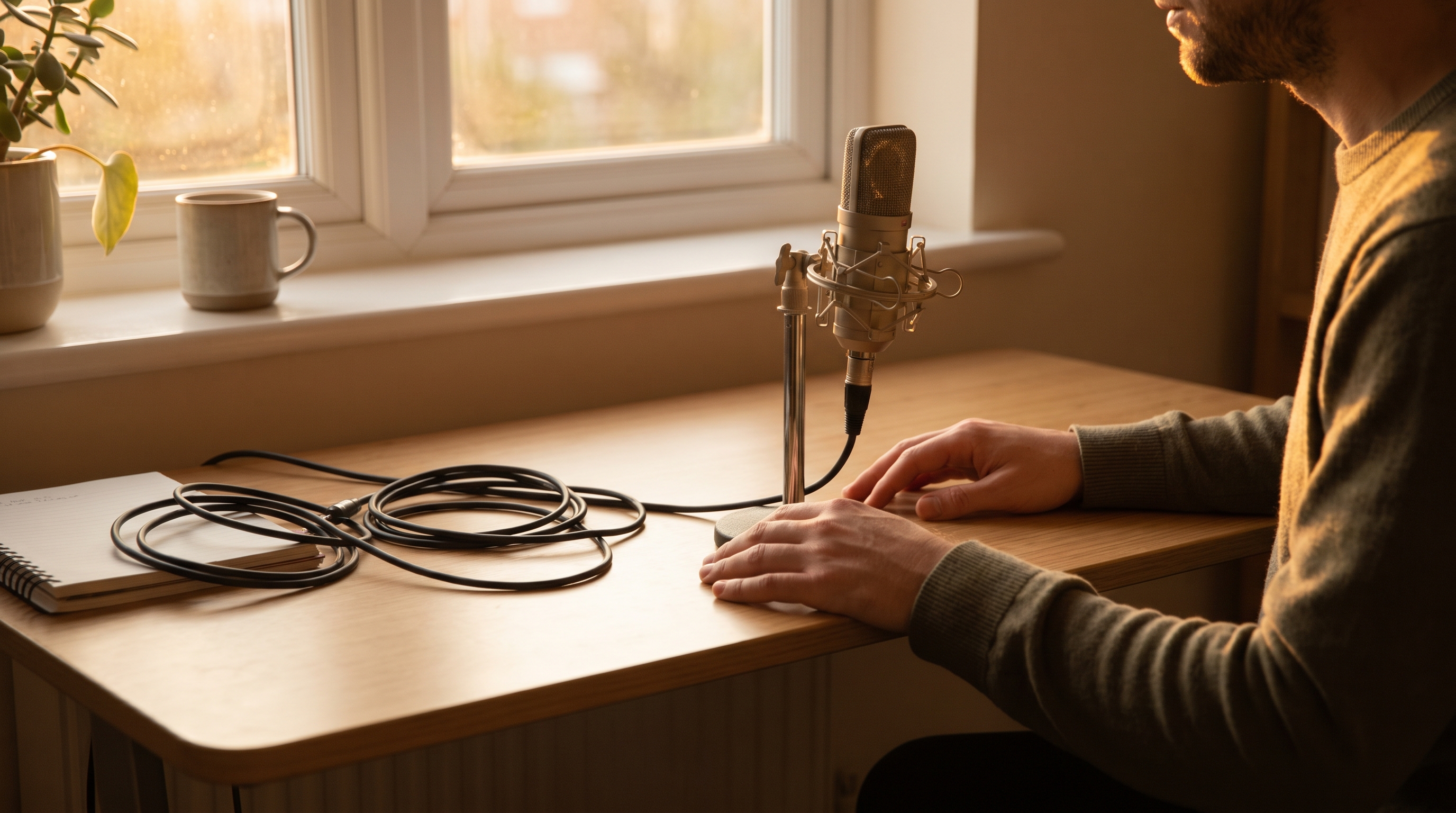
There is a specific kind of frustration that comes from knowing your content, your recording, your stream is good, but the audio gives it away. Not broken audio. Not obviously bad audio. Just the kind that signals to any attentive listener that the setup is improvised. A slight flatness. A room that breathes too loud. A voice that sits on top of the mix instead of inside it.
Most people diagnose this wrong. They upgrade the microphone. Sometimes twice. The problem usually isn't the microphone.
The real bottleneck is what happens after the microphone
A good condenser mic plugged into a laptop headphone jack is still a good mic receiving a bad signal path. The preamp matters. The gain staging matters. The ability to route, shape, and process audio in real time, before it ever hits the software, matters more than most people expect until they've experienced the difference.
This is why a mixer is not a studio luxury. It's infrastructure. And the reason so many home producers and streamers skip it is that the category has historically asked for a choice: consumer-grade gear that's easy but limited, or professional gear that's capable but sized and priced for a full rack. The middle ground was thin.
48V phantom power is the specification that separates serious mixers from adequate ones. Without it, you're locked out of the condenser microphone category entirely, which is where broadcast-quality voice recording lives. Most entry-level interfaces offer it. Most entry-level mixers don't bother, because their buyers aren't expected to need it. It's a quiet way of sorting who the product was actually designed for.
The DSP question is related. Effects processing built into the hardware means the computer isn't doing that work, which matters when a machine is already running streaming software, a browser with twelve tabs, and whatever else. More practically, a 99-effect DSP processor that handles reverb, chorus, and echo with real variety means the right setting exists and can be dialed in once. Not endlessly adjusted. Found and left alone.
We settled on the 6-Channel Audio Mixer because it takes that middle-ground problem seriously. Six channels gives enough routing flexibility for a real setup, whether that's a mic, an instrument, a secondary audio source, and a monitor return, or a more straightforward two-mic configuration that just wants headroom. Bluetooth and USB connectivity handle integration with whatever is already on the desk without requiring new cables or adapters. The phantom power is there. The DSP is genuinely varied. And the form factor is compact enough to live on a desk without reorganizing the room around it.
For someone who records, streams, hosts a podcast, or just runs audio through a setup that deserves better than a basic interface, this is the kind of upgrade that makes every session quieter in the ways that matter and richer in the ways that are audible. It's also the kind of thing that's hard to buy for yourself because it feels like a deliberate purchase, the sort a person names specifically when someone asks what he actually wants.
Worth pointing someone toward.