
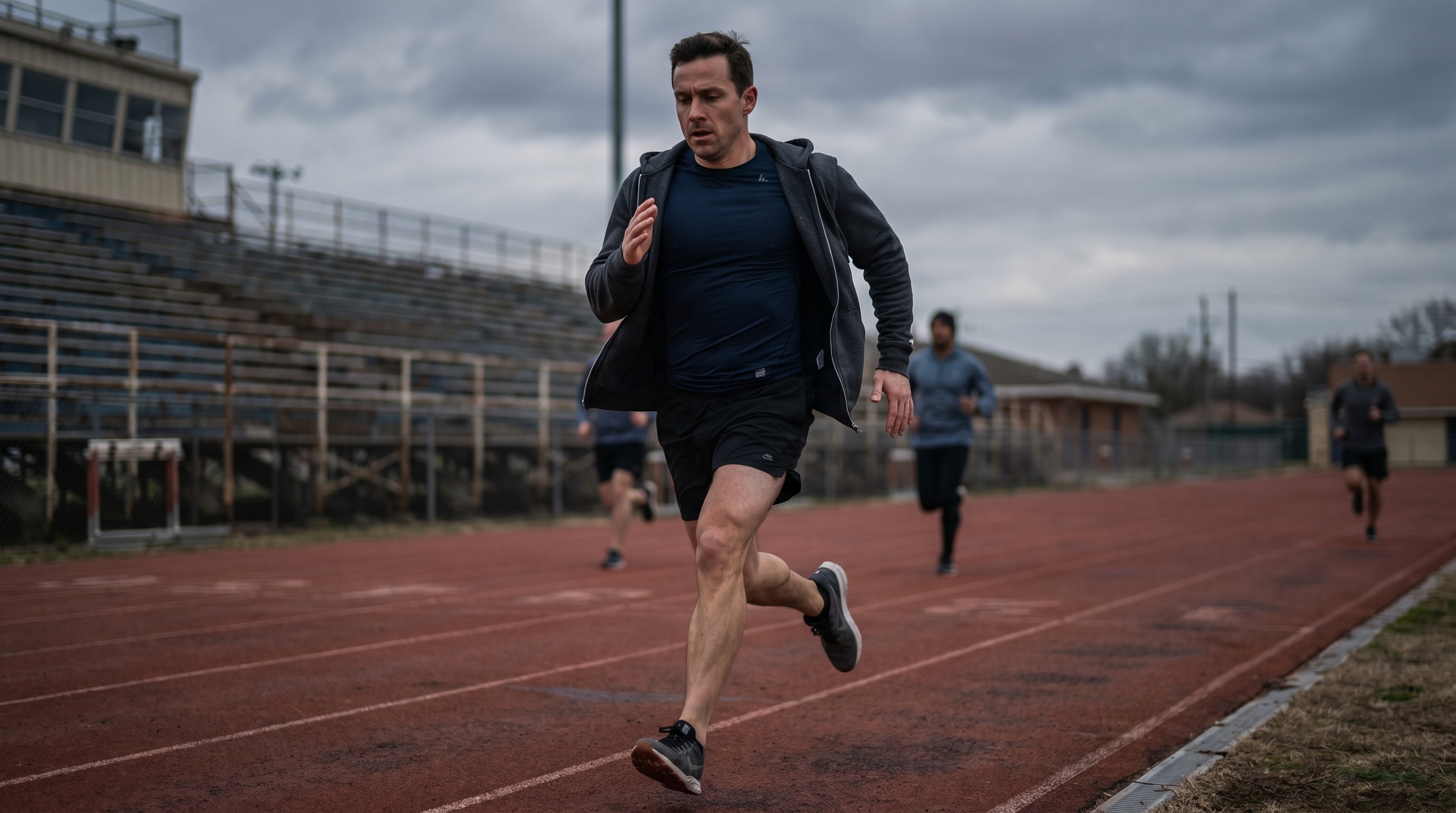
There's a category of clothing that gets purchased once, worn into the ground, and replaced with whatever's cheapest at the time. Base layers live in that category for most men. The logic goes: nobody sees it, so it doesn't matter. That logic is exactly why so many guys are walking around with a bunched-up cotton shirt under their workout gear, wondering why everything feels slightly off.
The layer closest to your skin does more work than any other piece in the rotation. It manages moisture, it affects how outer layers sit and move, and it's the first thing that communicates with your body during any kind of effort. Getting it wrong isn't neutral. It's a slow accumulation of small annoyances: fabric that rides up, seams that bite under a pack strap, a shirt that's still damp an hour after you've stopped moving.
What compression actually means when it's done right
The word "compression" gets thrown around loosely. On a lot of garments it just means "tight." Functional compression fabric has structure to it, a four-way stretch that moves with the body rather than pulling against it. The difference shows up immediately when you're in motion. A shirt that stretches with your shoulder rotation instead of resisting it isn't a small thing. Over the course of a run, a climb, or a long day on your feet, it compounds.
Flat-seam construction matters for the same reason. Raised stitching is invisible until it isn't. One long hike with a loaded pack is all it takes to understand why the seam placement on a base layer is worth paying attention to. The best ones disappear completely. You stop thinking about them, which is the point.
Shape retention is the other variable that separates a base layer worth keeping from one you phase out after six months. A compression fabric that loses its structure after washing doesn't hold up its end of the deal. The whole premise is that it fits close and moves correctly, and that requires the fabric to stay consistent over time, not just on the first wear.
The version we settled on for the shop is the Short Sleeve Compression Layer. Four-way-stretch fabric, flat-seam construction throughout, built-in UPF protection for outdoor wear, and a fit that reads as close without tipping into restrictive. It dries fast enough to go from a morning run into the rest of the day without a change of plans. Under a flannel, under a jersey, or worn solo at the gym, it handles all three without adjusting its behavior.
For someone who actually uses his gear, this is the kind of piece that earns permanent rotation status quietly. He won't talk about it. He'll just reach for it every time it's clean, and eventually notice when it's not there. That's the metric that matters for a base layer: not whether it impresses anyone, but whether it gets worn out before it gets replaced.
Worth handing over.